
Breast Augmentation in San Francisco
Board-certified plastic surgeon Dr. Roy Kim combines subfascial implant placement, hybrid fat grafting, and a rapid recovery protocol to deliver natural-looking breast augmentation results. Over 25 years of experience in San Francisco and Alameda.
SURGERY TIME
1-1.5 Hours
ANESTHESIA
General
RECOVERY
3-4 Days to Desk Work
RESULTS
Long-Lasting

Your Complete Guide to Breast Augmentation
I’ve performed breast augmentations for over 25 years, and the procedure I do today looks nothing like what I was trained on. Subfascial placement, hybrid fat grafting, rapid recovery protocols: the technique has changed dramatically, and so have the results. The right implant, the right placement, the right surgeon. Get those right, and you forget you ever had surgery.
With my Rapid Recovery protocol, most patients return to office work in 3 to 4 days and light exercise in 1 to 2 weeks. Breast augmentation averages between $9,000 and $16,000 in the Bay Area depending on implant type and whether a lift is included.
Benefits of Breast Augmentation
Enhance your figure with beautiful, natural-looking results
Increased Volume
Add fullness and projection proportional to your chest width and frame, using silicone gel implants from Allergan, Mentor, or Motiva
Restored Volume
Regain breast fullness lost after pregnancy, breastfeeding, or significant weight loss
Improved Symmetry
Correct natural asymmetry between breasts. Most women have some degree of it, and augmentation combined with proper planning addresses it directly.
Natural-Looking Results
Subfascial placement and hybrid fat grafting produce results that look and feel like natural breast tissue. The best augmentation is one nobody notices unless you tell them.
Faster Recovery
A 72-hour numbing injection (included at no extra charge) covers the peak discomfort window. Most patients manage with Tylenol alone and return to desk work in 3 to 4 days.
Long-Lasting
Modern implants last 15 to 20 years or longer. There is no automatic 10-year replacement requirement. Periodic imaging after 10 years is recommended for silicone.
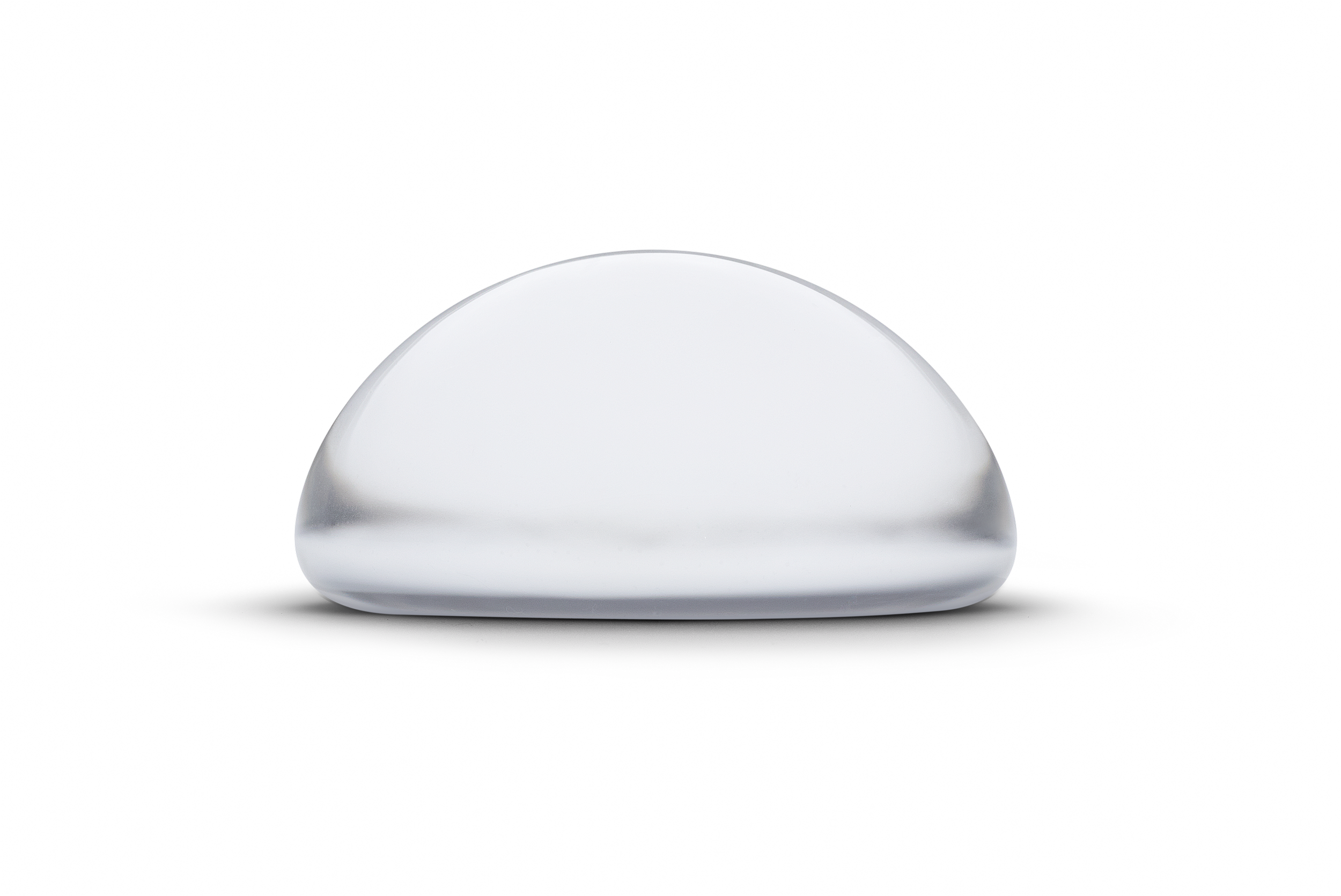
Silicone Gel Implants
Most Popular • Natural Feel
Key Features:
Cohesive gel that mimics natural breast tissue
Lower rippling risk, especially for thin patients
Pre-filled by the manufacturer
Available in multiple profiles (low, moderate, high)
Preferred choice for the majority of patients in our practice
FDA-approved for ages 22 and older
Periodic MRI or ultrasound screening recommended
Best For: Most patients. Silicone is almost always the better option for thin patients with minimal natural breast tissue because rippling is much less visible. In my practice, the majority of patients choose silicone.
Breast Implant Options
Choose the right implant type for your goals and anatomy
Saline Implants
Adjustable • FDA-Approved
Key Features:
Filled with sterile saltwater after placement
Volume adjustable during surgery
Rupture is immediately obvious (body absorbs saline harmlessly)
Feels firmer than silicone
Higher rippling risk in lean patients
Lower cost than silicone
FDA-approved for ages 18 and older
Best For: Patients who prefer the peace of mind of obvious rupture detection, patients aged 18 to 21 (not yet FDA-eligible for silicone), or patients where budget is a primary factor.
Motiva Implants
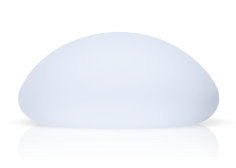
Premium Option • Softer Feel
Key Features:
Ultra-soft, most natural feel available
TrueMonobloc® seamless shell construction
BluSeal® visual indicator technology
Q Inside Safety Technology® (RFID chip)
Low rupture and capsular contracture rates
Extended warranty coverage
Premium investment for optimal results
Best For: Patients seeking the softest, most advanced implant technology with enhanced safety features and the most natural feel possible.
Implant Placement Options
Where the implant is positioned affects your results
Option 1: Subfascial (Under the Fascia)
Dr. Kim’s Preferred Approach
The implant sits beneath the fascia, a thin but strong layer of connective tissue covering the pectoral muscle, but above the muscle itself. This is my preferred approach for the majority of patients.
More natural look and feel. The fascia provides coverage without the drawbacks of muscle placement.
No animation deformity. Implants don’t jump or distort when you flex your chest.
Faster, more comfortable recovery. No muscle is cut or stretched.
Normal arm use from day one.
Ideal for active patients who lift weights, do CrossFit, or train upper body.
Best for: The majority of patients. Delivers the most natural-looking and natural-feeling results with the fastest recovery.
Option 2: Submuscular (Under the Muscle)
The implant is placed beneath the pectoralis muscle. Still a solid technique with a long track record.
Maximum soft tissue coverage over the implant
Good option for very lean patients with almost no breast tissue
Higher initial discomfort because the muscle is stretched
Risk of animation deformity (breast distortion with chest flexion)
Longer recovery due to muscle involvement
Best for: Patients with very minimal breast tissue who need maximum coverage, or specific revision cases.
Option 3: Dual Plane (Combination)
The upper portion sits under the muscle, lower portion under breast tissue. A hybrid approach.
Combines benefits of both placements
Good option when combining augmentation with a lift
Still involves muscle dissection, so recovery is longer than subfascial
Best for: Select cases where anatomy calls for it, particularly when combining augmentation with a breast lift.
Choosing the Right Size
Cup size is the single most misunderstood concept in breast augmentation.
A C cup at one bra brand is a D at another and a B at a third. Instead, I focus on implant volume (measured in cubic centimeters) and how that volume interacts with your chest width, tissue thickness, and body proportions.
During your consultation at my office on Sutter Street, we’ll try different sizers so you see and feel the range of options.
Body Measurements
Your chest width, existing breast tissue, rib cage size, and shoulder width all influence what size will look proportionate and natural on your frame.
Lifestyle Considerations
Active lifestyle, sports, clothing preferences, and occupation may influence your ideal size choice.
Implant Dimensions
Volume (cc), width (base diameter), projection (profile), and height all work together to create your final result.
Aesthetic Goals
Do you want a subtle enhancement, moderate fullness, or dramatic transformation? Your desired look guides size selection.
Existing Breast Tissue
Amount of natural breast tissue affects what size can be placed comfortably and what size will achieve your desired cup size.
Try-On Sizers
Dr. Kim provides sizing bras with implant sizers so you can see and feel different sizes before making your final decision.
Am I a Candidate for Breast Augmentation?
Determining if breast augmentation is right for you
You May Be a Good Candidate If:
In good overall health with no uncontrolled medical conditions
At a stable weight (significant weight changes after surgery affect results)
Done having children, or aware that pregnancy and breastfeeding will change the result
Non-smoker, or willing to quit for at least 4 to 6 weeks before and after surgery
Want more volume or better symmetry
Have realistic expectations about what augmentation achieves
At least 18 (saline) or 22 (silicone) years old
You May Not Be a Candidate If:
Currently pregnant or breastfeeding
Active breast infection or unresolved breast masses
Unrealistic size expectations relative to your frame
Heavy smoker unwilling to quit
Significant breast sagging without volume loss (may need a lift, not augmentation)
Not prepared for recovery time and restrictions
Uncontrolled diabetes or autoimmune disease
Augmentation adds volume, but it doesn’t fix position. If your breasts have lost their natural shape from pregnancy, weight changes, or gravity, you may need a breast lift in addition to implants, or sometimes a lift alone. I’d rather be upfront about that so we plan the right procedure from the start.
Breast Augmentation: Starting at $9,000
This Includes:
Board-certified plastic surgeon with 25+ years experience
All surgical fees and anesthesia
FDA-approved silicone or saline implants
Accredited surgical facility with board-certified anesthesiologist
72-hour numbing injection (included, no extra charge)
Post-operative care and follow-up visits
Implant warranty registration
Variables Include:
Premium Motiva implants
Fat grafting for hybrid augmentation (most natural result)
Combining with a breast lift
Advanced scar management protocol
Note: Final investment depends on implant choice, technique, and your specific goals. Most patients invest $9,000 to $16,000.
Real Patient Results
See the natural, beautiful transformations Dr. Kim's patients have achieved
Frequently Asked Questions
-
About 1 to 1.5 hours for a straightforward augmentation. A hybrid augmentation with fat grafting adds 30 to 45 minutes. If we’re combining it with a lift or other procedure, plan for 2 to 3 hours total. You’ll be under general anesthesia the entire time with a board-certified anesthesiologist monitoring you.
-
With modern silicone implants, subfascial placement, and proper surgical planning, the results should look and feel natural. The key factors are choosing the right implant size for your frame, using the right placement technique, and working with a surgeon who prioritizes proportion over volume. Adding fat grafting (hybrid augmentation) makes the result even more natural. I tell patients that the best augmentation is one nobody notices unless you tell them.
-
Saline is filled with saltwater and feels firmer. Silicone is filled with cohesive gel and feels more like natural breast tissue. Silicone implants also have lower rippling rates, which is especially important for lean patients. Saline’s advantage is that a rupture is immediately obvious. Both are safe, FDA-approved options with decades of clinical data.
-
Subfascial placement positions the implant beneath the fascia (a layer of connective tissue covering the chest muscle) but above the muscle itself. It gives soft tissue coverage without the animation deformity and recovery pain associated with submuscular placement. The result looks and feels more natural, and recovery is faster. It’s my preferred technique for the majority of patients.
-
Forget cup sizes. During your consultation, we’ll use sizers and 3D imaging to help you visualize different volumes on your body. I take measurements of your chest width, tissue thickness, and skin elasticity to determine the range of implants that will work well with your anatomy. Most importantly, bring reference photos of results you like.
-
There’s no set lifespan. Many patients keep their implants for 15 to 20 years or longer without issues. Manufacturer warranties cover 10 years. I recommend periodic imaging (MRI or ultrasound) to check for silent ruptures in silicone implants, especially after the 10-year mark. You’ll only need replacement if there’s a problem or if you want to change size.
-
Walking is encouraged the same day. Office work resumes at day 3 to 4. Light weights and cardio at week 1 to 2. Full exercise including upper body at week 3 to 4 for most patients. Heavy lifting and CrossFit at week 4 to 6 with gradual progression. I give specific clearance at each follow-up visit.
-
Most women with implants breastfeed without issues. The implant sits behind the breast tissue (or behind the fascia and the tissue), so the milk ducts and glands are preserved. The periareolar incision has the highest (though still low) risk of affecting breastfeeding because it passes through more breast tissue. With subfascial placement and an inframammary incision, breastfeeding complications are exceedingly rare.
Ready to Talk About Your Options?
If you’re considering breast augmentation, the best next step is a one-on-one consultation where I evaluate your anatomy, discuss your goals, and walk you through the options that make sense for your body.
Call 415-362-1846 or visit our office at 450 Sutter Street, Suite 1440, San Francisco.
I also see patients at our Alameda location at 1403 Park Street.